
The Binaries Are Killing Us
Everyone loses the zero-sum game

I Blame the Zoroastrians
I do. It’s all their fault.
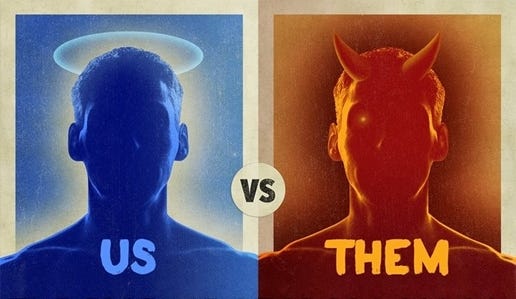
The ancient people of what is now Iran had a religion, dating at least back to the 2nd millennium, BCE, that posited a creator-god and a destroyer-god set in eternal battle with each other, with humankind caught between them and having to decide, day by day, which side to fight for.
This schema, the forces of asha versus the forces of druj, reflects a binary and dualistic worldview that we modern folks know all too well. Order vs. Chaos. Light vs. Darkness; Heaven vs. Hell. You may also know it by the name, Manichaeism, a different belief system which arose in roughly the same region, much later. Whichver source you go to, the idea has been around for a long, long time.
Interestingly, that dualistic “either/or” view of the universe was not part of ancient, temple-based Judaism or even the rabbinic form that followed it. That’s why people can get confused when they ask Jews what they believe about hell, a concept which simply didn’t exist for the Israelites back-in-the-day.
All of those ancient peoples smashed into each other a lot over the years, and they learned and stole ideas from each other all the time. Cosmic dualism was not part of the belief system within which Jesus would have been raised, but it definitely became central to Christianity later. You can see the gradual effects of an uncompromising war between light and dark on all of the Abrahamic religions over time—and, therefore, the effects on all of us, today, in the western world, whether we like it or not.
My vote is: Not.
I’m not a sociologist or a political scientist, but I feel like this all-consuming dualism is a problem for us in America. If everything in the universe is good guys vs. bad guys, and the fate of our souls depends on us choosing and fighting for the right side, how can we possibly be expected to live together in a pluralistic, heterogeneous society? If you believe that the many, many people who disagree with you are not simply misguided, but are evil, what can you do, other than fight?
And fight we do.
But should we? Personally, I think it’s crazy. Dualism is just not an honest way of looking at the world—or at each other. We’re not all-Blue or all-Red. The people of the world are not neatly divided (inside or out) into White and Black, with no room for shades of intellectual grey or superficial ecru, mocha, or whatever.
It’s a lie. And it’s killing us.
Give me a little moral and actual ambiguity to mess around in. Please! Give me something to wrestle with and think about. I’m fine with the world being more complicated than us vs. them. With apologies to Paul Reiser, I’m happy to make room for some nuance.
Motley Me
This idea that each of us is a motley mixture of things is not new. Here’s Montaigne, the 16th century inventor of the essay, grappling with the idea:
When I religiously confess myself to myself, I find that the best virtue I have has in it some tincture of vice; and I am afraid that Plato, in his purest virtue (I, who am as sincere and loyal a lover of virtue of that stamp as any other whatever), if he had listened and laid his ear close to himself and he did so no doubt — would have heard some jarring note of human mixture, but faint and only perceptible to himself.
As a Platonist and a lover of the idea of purity of forms, this was not a happy thought for Montaigne. He would have preferred to be able to apprehend reality in its theoretical purity. But it didn’t seem to exist.
As he says:
Man, in all things and throughout, is but patchwork and motley. Even in our moments of greatest pain or most exalted joy, our nature is such that we cannot experience anything in its purity, composed as we are of such a blend of disparate elements.
[For more musings from and about that melancholy Frenchman, check out this essay from which I stole the selections above: The Tragedy and Comedy of Life - by K.S. Bernstein.]
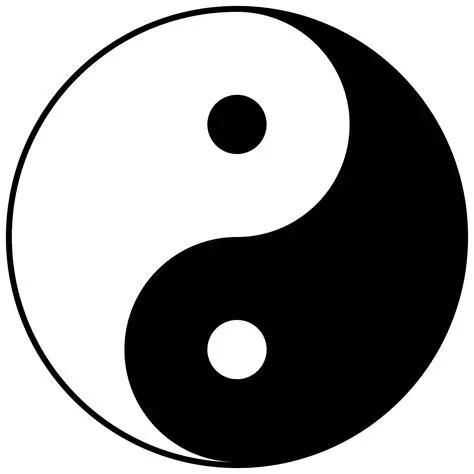
This “motley” idea is not something modern or western, either. The ancient yin/yang symbol shows clearly that each a thing always has an element of its opposite within it. Destroy it, and you kill a part of yourself.
The Middle Path
Aristotle had it right, I think. The way forward is the middle way, or the golden mean. The extreme positions are not places for us to live in; they are border-markers of the road we walk—guardrails placed to mark a safe and sane space in between. The things we fight about are rarely either/or; most of them are both/and, and they’re complicated. It’s up to each of us, and then all of us as a polity, to figure out what it all means and how to make it work.
That’s what I think, anyway.
Now, did I work through the idea rationally and objectively, or is it simply the way I’m built and how I naturally deal with the world? I’m not sure. It’s probably the latter. But that doesn’t mean it’s wrong.
Extreme partisanship establishes a Manichean state of war between eternally opposing forces. It’s a zero-sum game. We can see it all around us. But democracy doesn’t work that way, as I wrote about a while ago. Democracy requires dialogue and compromise and, if we can manage it, consensus. If hard-core partisanship is fated to be our way from now on, democracy may simply stop working.
I don’t think it has to, though, because most of us really do walk the middle way, most of the time. We aren’t as partisan as we pretend to be. We may climb a hill and wave a flag in our minds, but in our day-to-day reality, we muddle through the muck as best we can. We believe in freedom, but not license to do whatever, wherever, to whomever. We believe in security, but not a repressive surveillance state. We believe in the importance of non-conformity; we also believe in cohesive and strong communities. We believe in ambition; we also believe in equity. We believe in tradition; we also believe in progress (in life and in education, as I posted back in February).
How to reconcile all those things can be challenging. One algorithm or motto won’t manage it.
But it’s not impossible. You don’t have to choose one side or the other. It’s not true that one thing is all good and the other thing is all bad. In most cases, there are good and valuable ideas on both sides of the equation, that are set in in dynamic tension with each other. Our job is to live within these tensions, not opt for one and trash the other. We have to decide how to balance opposing goods and find a place where we’re comfortable living.
Each of us has to do that as individuals finding our way in the world. And then we have to do it again when we meet in public with other people. “Checks and balances” doesn’t refer only to branches of our government; it also refers to the way we are meant to work together, checking each other’s ideas and impulses and balancing each other out. We challenge each other. We learn from each other. We moderate each other’s extremes. We find consensus.
Or we don’t. We take an extreme position, we dig in our heels, and we attack or troll each other on positions both grand and petty. You’re not a real man if you don’t lift. You’re not a real woman if you’re not a tradwife. You’re not a real American if you can’t trace your family back to the Mayflower. Or you’re a transphobe if you’re not quite sure who should play on which sports team. You’re a misogynist if you think children might benefit from more time at home with their mothers. You’re a fascist if you think national borders matter. Only one thing can ever be correct, and it is correct in bold, bright lines. And, amazingly, whoever happens to be speaking is possessed of the truth.
But guess what? Nobody is 100% right about 100% of things, 100% of the time. No person, no religion, no party. Nobody.
Not even me, in reference to what I just wrote. Because sometimes, the extreme position is correct, and both-sides-ism is feckless and contemptible. The Nazis did not “have a point” about Jewish influence in German society. You do not “have to hand it” to the southern planter class for caring about White heritage. Some things are just flat-out evil and need to be defeated.
As William Lloyd Garrison, the 19th century abolitionist said, “I am in earnest, I will not equivocate, I will not excuse, I will not retreat a single inch, and I will be heard.” Do we think he was wrong? I don’t.
So: moderation in all things…including moderation, I guess.
Moderation vs. Equivocation
Which makes me wonder: what’s the difference between taking an Aristotelian, middle-path position on an issue and being uselessly ambivalent?
I think the difference is right there in the wording of the question. Taking a moderate position is still taking a position. It’s looking at an issue along a continuum and deciding where along the spectrum you feel comfortable. You can look at all the points between 0 and 10 and say, firmly, definitively, that you believe the correct place to be is 7. That is not wishy-washy, or ambivalent, or equivocating. Being a moderate doesn’t mean you have to advocate equally for every possible position between the extremes. You say “7,” just as firmly as an extremist would say, “10.”
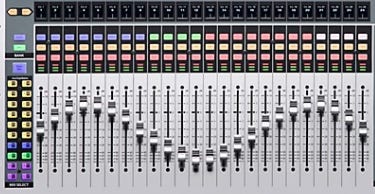
I wrote a couple of years ago about treating the world as though you were a slider, like a light dimmer, and not an on/off toggle (a piece which I now realize treaded some of the same territory as this post). I still believe that image is useful.
Life in its complexity is like an enormous recording console, with many possible settings. The best setting depends on the music you are trying to mix, and no single setting is correct for every song. Your party, your religion, or your tribe may have gifted you with preset levels to be used for all questions and in all cases, but that doesn’t mean you have to use those settings. You get to think about it. You get to decide.
And if every button is always set at 0 or 10, I think it’s worth thinking twice.
Oh thank you dear wise and well read and well spoken friend. We are so polarized there is only one right answer and one wrong one depending on the group you are with. And I think this does such a disservice to kids growing up in this environment. They are pushed to “choose a side” too young and when we’re teaching kids that extremes are the only answers that feels dangerous and unfair.